

Phoenix Rising: Bold Ideas for States to Transform Public Education

American public education stands at a precarious moment where states are now in the driver’s seat. Pandemic-related learning losses and enrollment declines, met with a federal retreat and fiscal pressures, leave schools and districts facing an uncertain landscape. As pressures mount between the rise of generative AI and growing divisiveness around school choice, young people […]
From Vision to Practice: : How District Leaders Would Improve Civic Learning

As the 2026 midterms approach, the public and policymakers are asking whether schools are truly preparing students to participate in civic life. This third brief in our series from the American School District Panel (ASDP), a research partnership between RAND and CRPE, draws on Spring 2026 survey data and interviews with 28 district leaders to […]
Leading Through Uncertainty: State Approaches to AI in K–12 Education

AI reached K–12 classrooms before state policies on its use and role in public education did. States are taking action—but for most, that action is still ad hoc, fragmented, and not keeping up with the pace of change in classrooms and workplaces. This report draws on survey responses and interviews with SEA staff and partner […]
PROFILE: From Exploration to Coherence: How SCORE Is Helping Tennessee Make Sense of AI in Schools

Tennessee has been a national leader on instructional improvement. Now, like every state, Tennessee faces a newer question: where and how should AI fit in? Most of that burden still falls on districts that have to navigate a fast-moving, unproven marketplace of AI tools largely on their own. But at the same time, many states […]
From Support to Priority: How Formal Structures Can Help Districts Protect Time for Civics Learning

Civic learning is having a moment. But what actually makes it stick as a priority in schools? New national survey data from the American School District Panel (ASDP)—a research partnership between CRPE and RAND—find signs of growing momentum: 20% of district leaders said their district had increased its prioritization of civic learning over the past […]
The Politics of Budgets: How Fourteen Districts Reduced Spending While Protecting Student Learning Experiences

Fiscal crises are no longer the exception for school districts; they’re the new normal. This report examines how 14 districts and charter networks cut costs while protecting student learning experiences. The report draws on case studies commissioned with colleagues from Afton Partners, Education Resource Strategies, and New Solutions K12, and is accompanied by four in-depth […]
The Missing Piece in Math Reform: Identifying and Supporting Students with Dyscalculia

Dyscalculia is a neurological learning disability that makes numbers and math difficult—it’s the math equivalent of dyslexia and affects a similar share of students (3-8% of school-age children). But while dyslexia has decades of legislative mandates, screening requirements, specialist roles, and teacher preparation behind it, dyscalculia has almost none of that infrastructure. This brief explores […]
Charting New Paths: What AI-Enabled Transformation Looks Like in Four Early Adopter Districts

Most school districts are using AI cautiously, usually to save teachers and administrators time. But a small group of districts is doing something different: using it to rebuild how school works. CRPE’s early 2026 study of AI Early Adopters sorted districts into five categories, from Dabblers to Reimaginers. This brief follows up with four districts […]
Does Team-Based Teaching Improve Student Learning? Early Evidence from Arizona
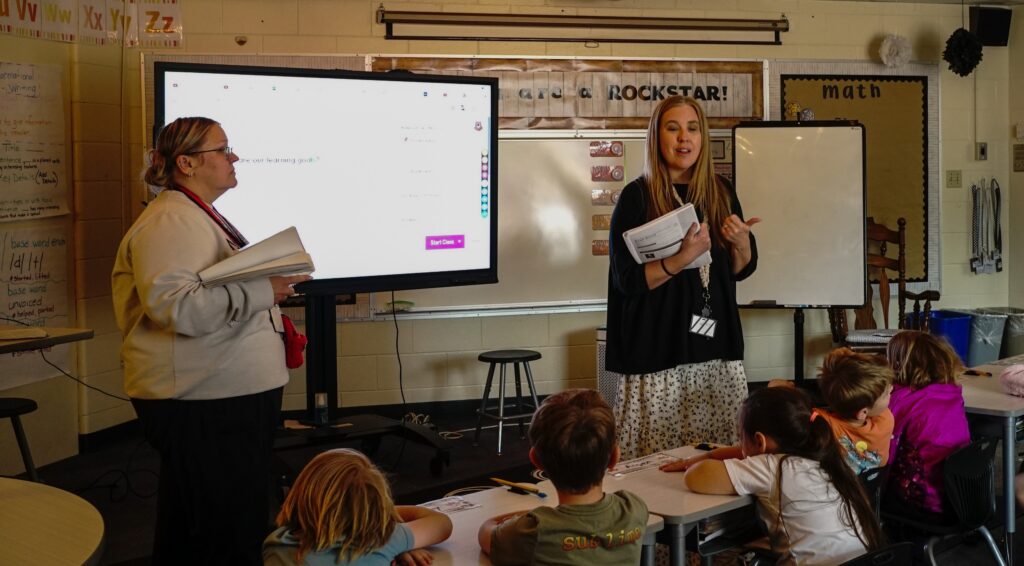
The traditional American classroom has looked the same for a century: one teacher, one room, one roster. Critics have long argued that this model leaves teachers isolated, overburdened, and with limited opportunities for specialization, collaboration, or career growth. In response, school systems across the country are experimenting with new ways to organize teachers via strategic […]
Webinar Plus Q&A: Why Motivated District Leaders Pursue Incremental Change
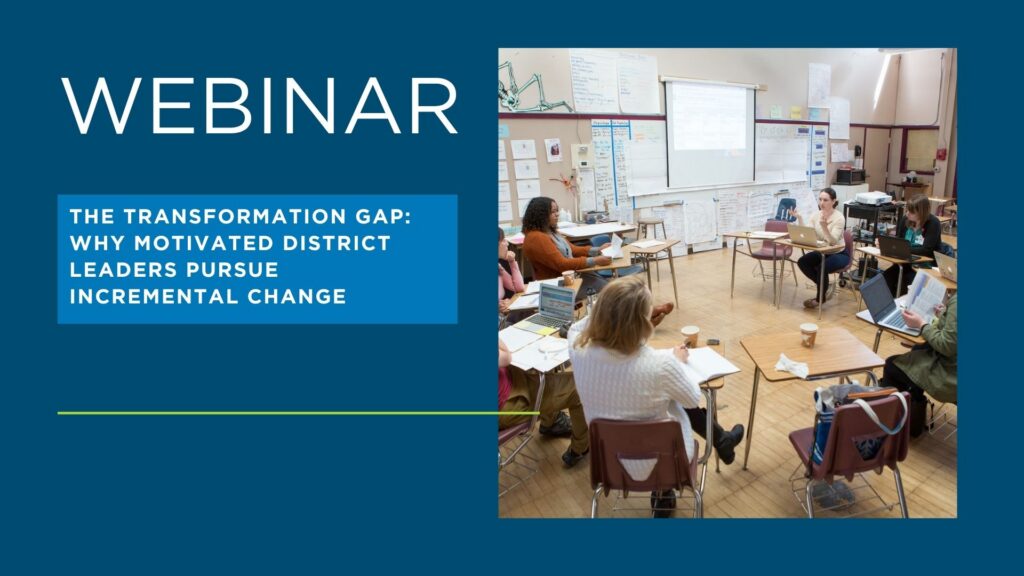
CRPE’s recent report, The Transformation Gap: Why Motivated District Leaders Pursue Incremental Change, sparked rich conversation during our webinar and panel discussion on August 5, 2026. The audience Q&A was robust, and we didn’t get to all of the great questions. We wanted to share the webinar recording for anyone who could not attend, as […]