

States and AI: An Early Look at How Early Adopters Are Approaching AI in Education

As AI use expands in schools, states are beginning to define their role—often without clear federal direction. What actions are they taking, and how are they approaching AI integration in K–12 education? CRPE’s new State AI Early Adopter Database compiles publicly available information on AI-related actions across 20 early adopter states in 2024 and 2025, including guidance, […]
Think Forward: Building a Coherent Approach to AI in Education

In November 2025, the Center on Reinventing Public Education (CRPE) convened a diverse group of policymakers, system leaders, educators, researchers, funders, and technology experts for the Think Forward: Learning with AI Forum in New Mexico. At a moment when rapid advances in artificial intelligence are colliding with longstanding inequities and structural challenges in K–12 education, […]
Virtual 1:1 Literacy Tutoring in Oakland Unified School District: Implementation and Effectiveness of a Pilot at Scale

In 2024–25, Oakland Unified School District (OUSD) launched a districtwide pilot of virtual, high-dosage, 1:1 literacy tutoring in partnership with three providers: Hoot, Ignite Reading, and OpenLiteracy. This initiative aimed to address early reading gaps, particularly in phonics, for K–2 students who were below grade level. Key Findings High implementation fidelity: Over 80% of tutored […]
Districts and AI: Early Adopters Focus More on Students in 2025-26

Introduction More Early Adopters are piloting systemwide AI strategies Early Adopters focus more on students, mostly with new tools Reimaginers keep pushing the boundaries of what’s possible with AI Districts must advance more coherent AI strategies for teaching and learning Across the country, the approach schools take towards Generative AI has changed: it’s moved from […]
Outmatched: Special Education Can’t Solve Problems Rooted in the Education Delivery System

In early 2025, the National Center for Education Statistics quietly announced a new record: 7.9 million public school students were identified with a disability under the Individuals with Disabilities Education Act (IDEA). The new data capped off a decades-long trend towards increasing numbers of children being identified with disabilities and swept up into special education […]
Making Room for What Matters: Innovative School Leaders Want Accountability, but With a Lighter Footprint
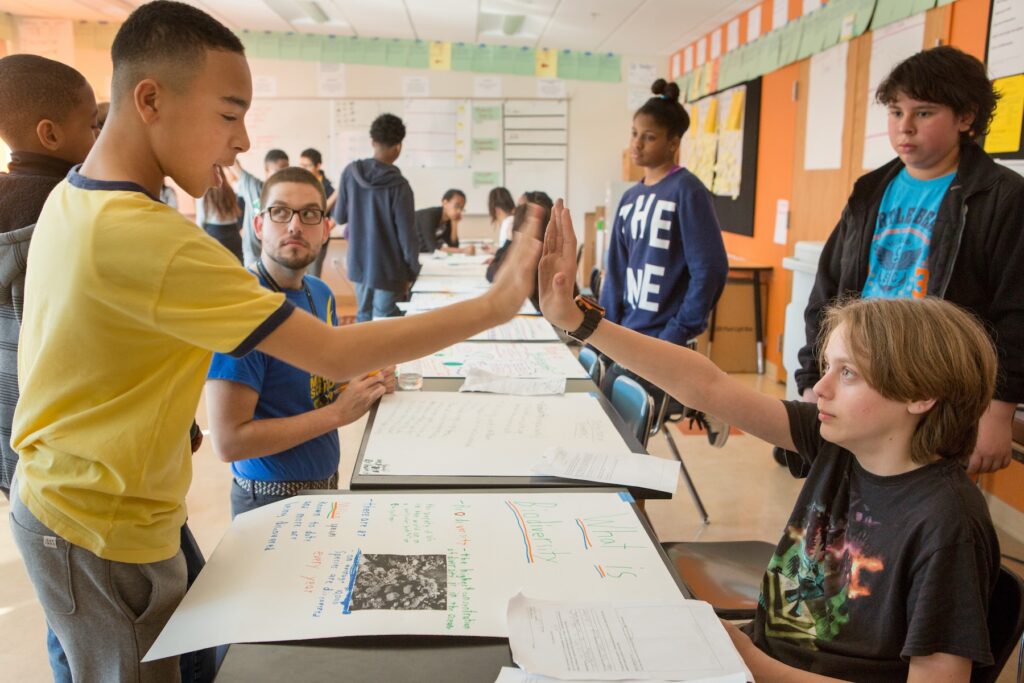
Across the country, school leaders are reimagining how students learn—designing models that are more engaging, effective, and connected to the world students are entering. But many say that today’s state accountability systems, while important for transparency and rigor, can make it harder to innovate. This report from the Canopy Project explores what 186 innovative school leaders say […]
The State of the American Student — 2025

Access to Qualified Math Teachers for All Students

Concerns about student math performance in the U.S. have grown in recent years, driven by persistent disparities, pandemic-related disruptions, and stagnating or declining national achievement scores. In response, the Center on Reinventing Public Education (CRPE) convened a panel of math experts to identify priority topics in K-12 math education. For the initial topic, we focused […]
Flipping the Script: Searching for Opportunity When a Child Has a Disability

Families of children with disabilities are often at the center of debates about education choice, but their voices are rarely heard directly. In a new exploratory report, CRPE researchers share stories from 28 families in Arizona and Florida using education savings accounts (ESAs) to educate their children with disabilities. Their experiences complicate the dominant narratives: […]
What Counts as Civics? A Look at How Districts Define and Facilitate Civic Learning
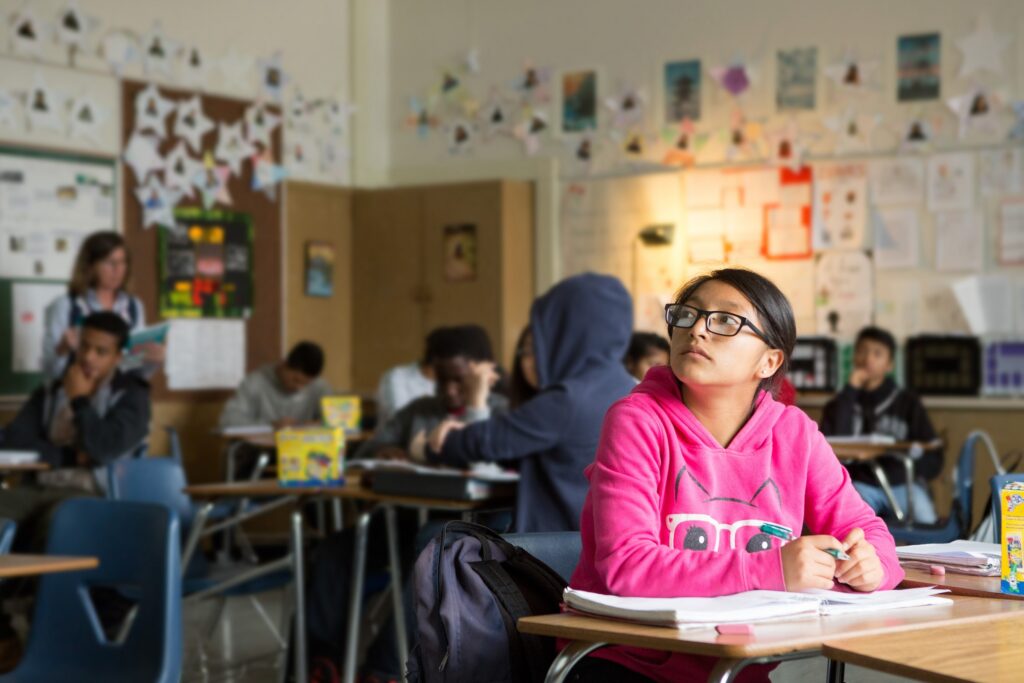
A new report from the American School District Panel, a research partnership between RAND and CRPE, examines how districts define and facilitate civic learning in an era of political polarization, competing instructional priorities, and uneven state support. Drawing on survey data from 170 public school districts and in-depth interviews with leaders from 18 systems, the study […]