

In Washington State, New Choices for Students with Disabilities

In our recent special education study, we found that Washington state’s charter schools are serving students with disabilities at a higher rate than the national charter school average. When our data revealed the schools were also serving students with a wide range of disabilities in a mostly inclusive environment, I reflected on my own experience. […]
Strategies for Nimble Cities: Lessons from Stepping Up, Our 18-City Project
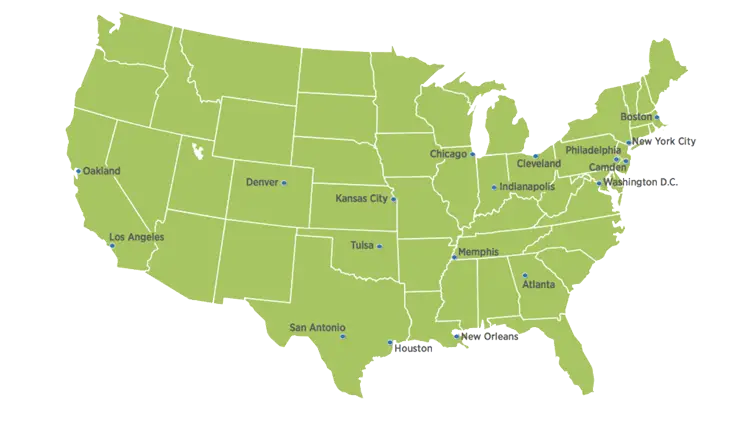
In 2017 CRPE published an analysis of student and school outcomes in 18 high-choice cities. It showed us that many cities were closing the gap between the city and state on key outcomes like graduation. But while the education system as a whole improved, achievement gaps by income and race/ethnicity remained. Across the country, disadvantaged […]
Personalized Learning’s Weakest Link?

Much of the work going on nationally to study and build the evidence base for personalized, student-driven learning focuses on changes in traditional metrics—scores on state standards-based tests and on similar forms of academic assessment, such as NWEA’s MAP tests. This is valid and worthwhile, but it is not the whole story. In fact, in […]
Removing the Boundaries Between High School, College, and Career

Twenty-five years ago, CRPE was founded on the idea of the school as the locus of change. Today we are reexamining our old assumptions in light of new technical possibilities, changes in the economy, and a recognition that even the most effective schools may need to develop new approaches to better serve students whose needs warrant […]
Are Washington Charter Public Schools Serving Students with Disabilities?
This brief presents data on how special education students in Washington state are being served in charter public schools, using a national and local context.
Today’s Education Systems Won’t Support Tomorrow’s Learners
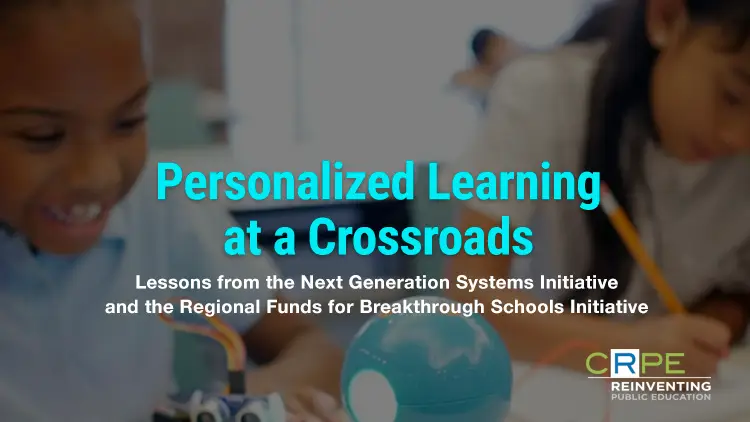
Today CRPE released a report that delivers some hard news about what we broadly refer to as “personalized learning.” As it has come to be defined in the field, personalized learning has little to do with technology and is more about finding ways for students to work at their own pace and in ways that […]
An Interview with Paymon Rouhanifard: Charting Camden’s Path to Improvement
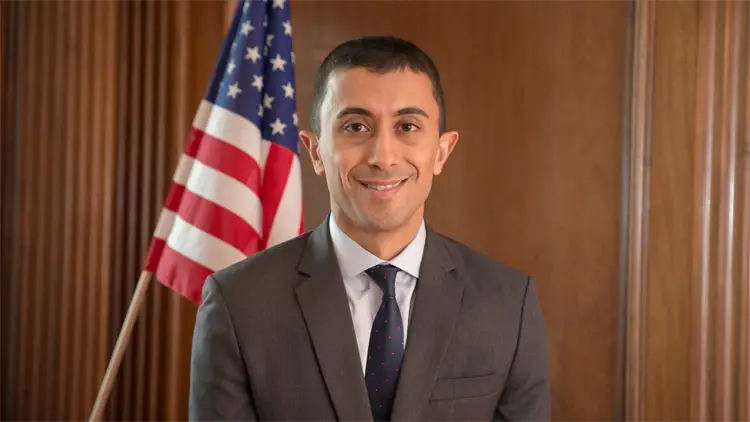
Paymon Rouhanifard has been the superintendent of Camden City Public Schools in New Jersey since 2013 when the district was put under state receivership. Camden still has a long way to go, but the changes thus far have been dramatic: graduation and proficiency rates have improved, and the majority of the city’s schools that were […]
Personalized Learning at a Crossroads
This report explores the early promise and challenges in personalized learning and calls for more system-level supports and strategies for innovation.
What Do We Actually Know about the Four-Day School Week?
This brief on the four-day school week answers common questions about its scope and trends and points out what is not yet known about the impacts on students and districts.
We Need to Prepare A New Generation of Education Systems Leaders
For more than a year, the U.S. Secretary of Education and the president of the American Federation of Teachers have been engaged in a bitter dispute about the public and private purposes of education in a free society and the proper role of government in providing it for all children. Reduced to soundbites, the debate […]