

Driving past Fred Hutchinson Cancer Research Center in Seattle, I noticed a billboard that reads something like, “We treat your cancer like it’s YOUR cancer.” The message is more than a slogan. It captures a growing conviction that generic approaches are no match for serious threats to human health.
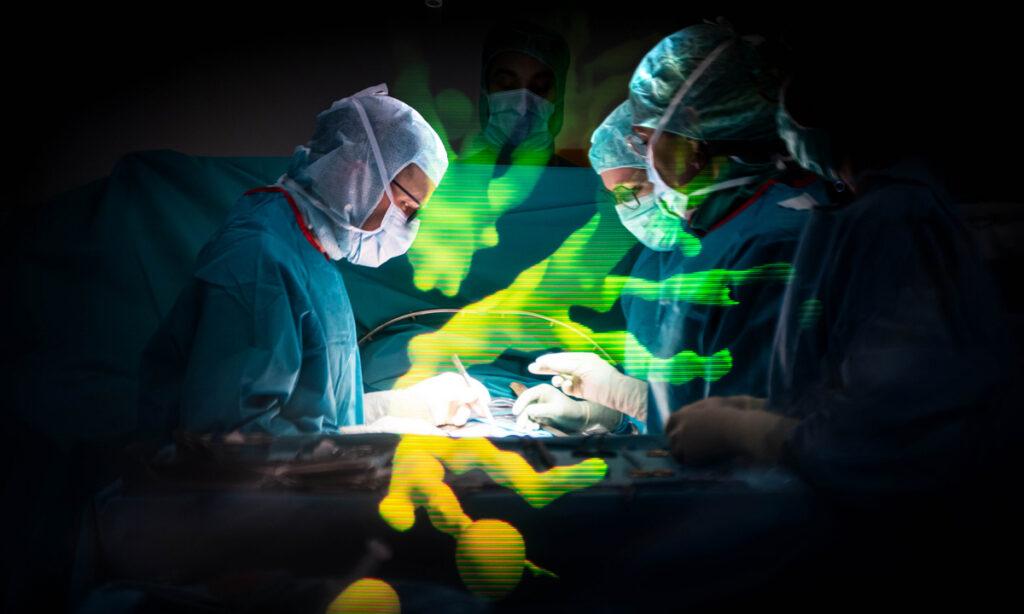
What distinguishes places like Fred Hutch is not just advanced science, but disciplined systems: shared clinical protocols, team-based decision-making and constant feedback between research and practice. These are the hallmarks of precision medicine, fueled by advanced diagnostics, data and generative artificial intelligence, and they are delivering transformative results in treating diabetes, heart disease and cancer. AI-assisted screenings are catching aggressive cancers earlier, as new models can analyze previously unexplained genetic mutations to forecast health risks.
Of course, education is not medicine. Learning is not governed by biology alone, student outcomes are harder to define, and schools have nothing like the professional norms or accountability structures of clinical care. But that is the point: Precision medicine began with a refusal to accept broad variations in care when better evidence and tools were available.
AI is already in classrooms across the country, but mostly to help teachers save time or give extra support to children with disabilities or language barriers. What if all students could attend schools that said, “We treat learning like it’s your learning,” offering precision education: a supportive environment harnessing human expertise and technology to deliver truly customized solutions for every child?
That reality is closer than we think. AI gives educators the potential to understand, diagnose and respond to students’ learning needs with a specificity that was previously impractical at scale. It can rapidly surface a child’s learning gaps and strengths in math and recommend targeted interventions. But that information alone does little; AI’s power lies in being embedded in professional workflows, guiding adults toward specific, evidence-based actions and tracking whether those measures improve learning over time. To effect genuine change, AI must be accompanied by a reevaluation of the systems that contain it.
Personalized learning was intended to accomplish this. But despite its popularity, it too often amounts to little more than self-paced software or playlists of digital content, mired in low expectations and disconnected from evidence-based teaching. CRPE’s own studies of personalized learning schools show how easily these efforts become convoluted, mushy, and unmoored from rigor.
Precision learning is fundamentally different. It would enable educators to use technology, data, and evidence to identify exactly where a student is struggling, which interventions are most likely to work and how to deliver them effectively and equitably. This is a commitment to evidence over intuition, to shared professional standards over individual preference, to accountability for results rather than good intentions. Personalization asks educators to adapt and give students more choices. Precision demands that state, district, and school leaders change how decisions are made, implemented, and evaluated.
The effort must start with defining what precision learning means and holding educators and developers accountable for its implementation. Ed tech developers should embed decades of learning science into their designs, just as medical software embeds clinical guidelines. Schools of education should lead the field in conducting and disseminating state-of-the-art research and training educators to use it, much as medical schools run clinical trials and keep practitioners current. And just as the federal government once seeded the Human Genome Project, a reimagined Institute for Education Sciences could lead a national effort to map the “learning genome”—a shared, continuously updated knowledge base of what works, for whom, and under what conditions.
States have a unique role in creating the conditions for precision learning at scale. Specifically, they can:
Build precision learning consortia that bring together educators, researchers, and ed tech companies to develop and test solutions and share results publicly. These consortia should make targeted investments in organizations with a proven track record of designing and implementing these approaches.
Align incentives and accountability systems so precision learning becomes a professional expectation, not an option. Just as medical boards define best practices for care, states could convene researchers, practitioners, and technologists to establish precision learning protocols, perhaps starting with reading and math, where the evidence base is strongest.
Rethink the role of the teacher. In a precision learning model, “the teacher” would no longer be a single role expected to diagnose, design, deliver, remediate, counsel, and motivate simultaneously. Schools would instead deploy differentiated teams, with some adults specializing in diagnostics and data interpretation and others in instruction, mentorship, or intervention, all supported by AI systems that surface evidence and guide decisions. This is more a labor redesign than a technological shift, requiring that states fundamentally rethink the role of the teacher, including certification requirements and salary schedules. Precision learning would replace the one-teacher-does-it-all model with specialized teams, backed by AI that surfaces insights and supports better decisions.
Ensure all schools have the resources, devices, and staff training needed for participation in precision learning. The greatest risk of AI-driven precision learning is that it deepens divides if access is limited to affluent schools. In medicine, precision treatments began as elite offerings before standards and insurance systems made them broadly available. Education must skip that inequitable phase entirely.
If a patient were dying and a proven treatment existed, it would be unthinkable for a doctor to withhold it. Yet in classrooms, students fall further behind every day, even when research-based solutions exist to help them succeed.