

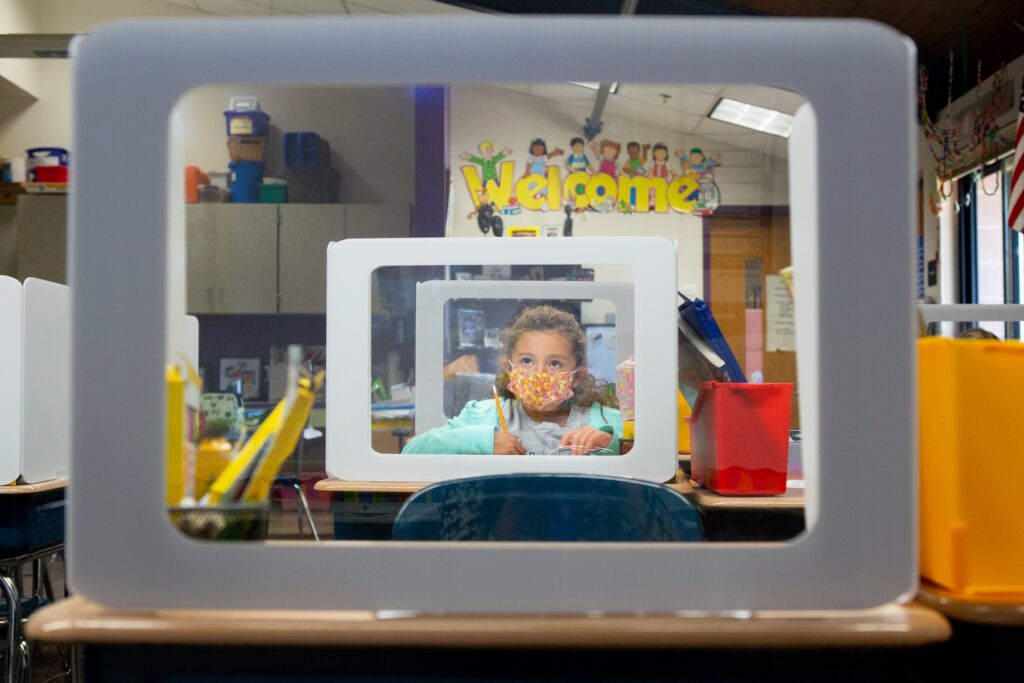
In 2024, four full years after the COVID-19 pandemic closed schools, districts, and public systems were still dealing with steep declines in student achievement and attendance. During the 2024-25 school year, 23% of students were chronically absent, compared to just 15 % before the pandemic, and all 50 states have yet to return to pre-pandemic levels of absenteeism. On NAEP, the Nation’s Report Card, 30% of fourth graders scored proficient or advanced in reading in 2024, down from 32 % in 2022. At the bottom of the achievement distribution, the situation is worse: 34% of eighth graders scored below basic in reading, the largest percentage in that category in NAEP’s 32 years of testing reading.
In this context, we launched our 2024 round of Evidence Project research funding. With support from the Walton Family Foundation, we solicited the field’s best ideas for research to understand chronic absenteeism and learning recovery. We received almost 100 letters of interest and 33 full applications, and we were able to fund seven exceptional research projects in these two areas. These studies posed important questions about the root causes of current crises and helped identify promising paths to recovery and reinvention. As the funding comes to an end, this synthesis looks across the published and upcoming reports to draw overarching conclusions and make recommendations for policy and future research.
The researchers found that the remaining COVID-related challenges are complex and that in many cases, existing strategies are not designed to match that complexity. Efforts to reduce chronic absenteeism and to accelerate learning more broadly have had uneven success, largely because the students and districts that are still struggling are also the ones current strategies are least equipped to reach or serve. The most-absent students are often dealing with family responsibilities, transportation issues, mental health struggles, or a lack of engagement, demonstrating how other major current challenges, such as academic performance declines, intersect with absenteeism. There have been larger increases in student absenteeism in low-income districts, for example, where students were also less likely to have recovered in math and reading.
Several studies also found that schools and districts lacked data systems that could track student needs and whether the interventions meant to address those needs were actually working. Additionally, researchers found that district leaders and school principals were critical to sustaining progress: leaders’ continued problem-solving and advocacy helped strategies, particularly learning-recovery programs like high-impact tutoring, continue after funding had ended and public attention had shifted.
Moving forward, districts and the field need better data systems to track students’ needs over time, adequate and reliable resources so effective programs don’t have to be scaled back, and new, more ambitious interventions that go beyond generic outreach to address students’ complex and individual challenges. Underlying all of this is the need for stable school and district leadership that can build strong staff, foster a culture of improvement, and use data to identify and respond precisely to student needs.
Evidence Project Research Funded in 2024
To help educational researchers and leaders understand the ongoing impacts of the Covid-19 pandemic on students and how best to move forward, we commissioned the following research projects:
- Post-Pandemic Recovery and Renewal: A Deep Exploration of Chronic Absenteeism—Causes, Consequences, and Potential Solutions, University of Southern California: This project used a nationally-representative survey, paired with interview data from the Understanding America Study, to investigate parents’ and teens’ attitudes and behaviors related to absenteeism in America’s schools.
- Examining the Role of Student Well-Being and Reverse Engineering Success in Chronic Absenteeism in Districts and Schools in Georgia, Michigan State University: To explore pre- and post-COVID trends in absenteeism and student well-being in the state of Georgia, this project used a mixed-methods approach that included qualitative data collection through a survey of school leaders, interviews with state policy actors, focus groups with parents and students, and quantitative analysis of school- and district-level administrative data.
- Wrong Target or Faulty Execution: Exploring Misalignments in Absenteeism Interventions Post-Pandemic in a Large Urban District, Vanderbilt University: This mixed-methods project examined Metropolitan Nashville Public Schools’ adoption of progressive approaches to chronic absenteeism through interviews with school leaders, staff, students, and parents, observation of district attendance meetings and school visits, and quantitative data analysis of district administrative data.
- Understanding Changes in Student Absences, Causes of Absences, and Potential Solutions Following the COVID-19 Pandemic, University of North Carolina at Chapel Hill: To study the causes and impact of increased absenteeism in North Carolina public schools, this project used statewide administrative data, statewide survey data, and qualitative data collected through interviews with students, families, and school leaders and staff.
- Pandemic Learning Recovery Strategies: Evidence from Massachusetts Charter Schools, Massachusetts Institute of Technology: This project utilized Massachusetts charter school admissions lottery data, state administrative data, and a novel survey on charter school learning recovery practices to study whether the effectiveness of Massachusetts charter schools declined before, during, and after the pandemic.
- Navigating the ESSER Cliff: District Strategies and Impacts on Tutoring Programs, Stanford University: This mixed-methods project used surveys, semi-structured interviews, and case studies to understand how districts’ responses to ESSER funding and the ESSER funding cliff affected high-impact tutoring programs.
- A Research-Practice-Partnership to Examine Learning Recovery Interventions in California, American Institutes for Research: This project leveraged a research-practice partnership between researchers at the American Institutes for Research (AIR), University of California (UC) Berkeley, and UC San Diego, and policymakers at the California Department of Education. Researchers closely examined data on learning recovery interventions and implementation in California public schools from the 2014–15 to 2024–25 school years, with a focus on improving and accelerating student outcomes.